
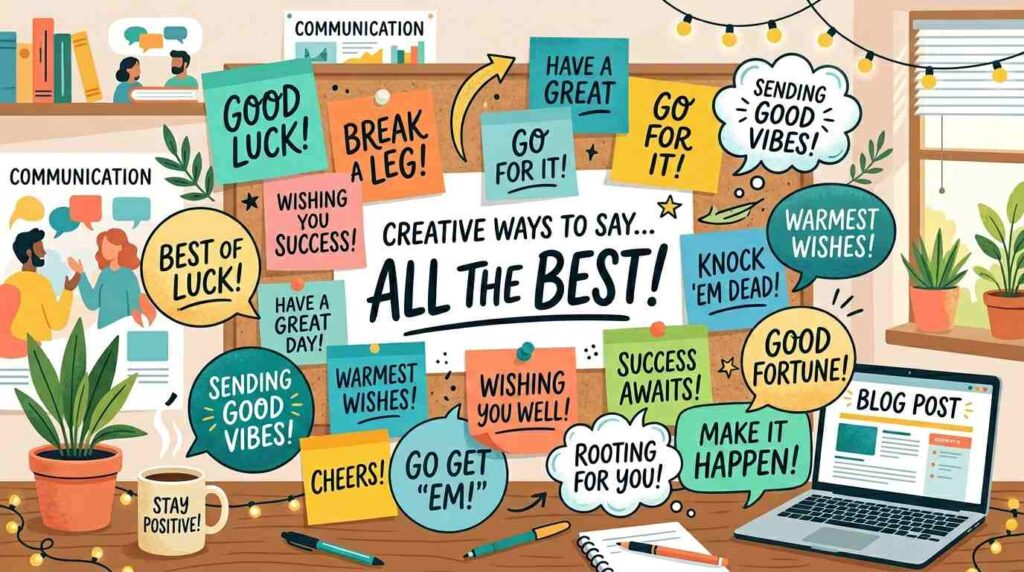
“All the best” — three small words that carry so much warmth. But when you find yourself typing the same sign-off in every email, text, and farewell card, those three words start to feel less like a heartfelt wish and more like a reflex. The good news? The English language is brimming with richer, more personal, and more memorable ways to say the same thing — and the right phrase can transform a forgettable goodbye into one that genuinely stays with someone.
Other ways to say “all the best” include phrases like “Wishing you every success,” “May good things find you,” “Godspeed,” and “Take care and stay well.” These alternatives work across formal emails, personal messages, farewell cards, and professional sign-offs — each carrying a slightly different warmth, tone, and level of formality.
Whether you are closing a professional email, wishing a friend well on a new adventure, saying goodbye to a colleague who is moving on, or looking for the perfect sign-off in a farewell card, the phrase “all the best” is a classic — but it is also one of the most overused expressions in the English language. Choosing a more fitting alternative not only makes your message feel personal and thoughtful; it shows emotional intelligence and genuine care.
In this guide, you will find 32+ other ways to say all the best, organized by tone and situation, with real-world examples, usage tips, and a handy quick-reference table. From formal professional closings to playful, heartfelt, and even spiritual expressions — there is something here for every relationship and occasion.
📋 Table of Contents
- What Does “All the Best” Mean?
- When to Use Alternatives
- 32+ Other Ways to Say All the Best
- Quick Reference Table by Situation
- Tips for Choosing the Right Sign-Off
- FAQs
- Conclusion
What Does “All the Best” Actually Mean?
“All the best” is a farewell expression used to wish someone happiness, success, good health, and positive outcomes — all at once. It originated in formal letter-writing traditions as a polite and warm sign-off, and over centuries, it evolved into the versatile phrase we use today in emails, texts, cards, and spoken goodbyes.
The phrase works in both formal and informal settings, which explains its popularity. But that very versatility is also why it can feel generic. When you say “all the best” without thinking, the recipient often receives it that way too — without feeling it. The other ways to say “all the best” listed below allow you to express the same genuine wish with greater specificity, warmth, and intention.
When Should You Use an Alternative?
- When signing off on a farewell email to a colleague or team member
- When wishing a friend luck before a big life event — an exam, interview, or move
- When closing a professional letter or formal correspondence
- When writing a message in a retirement, graduation, or going-away card
- When you want your goodbye to feel personal, not templated
- When the relationship calls for something warmer, more confident, or more spiritual
32+ Other Ways to Say “All the Best” (With Examples)
Formal & Professional
1. Wishing you every success.
A polished, professional alternative that works perfectly in business emails, formal letters, and LinkedIn messages. It conveys genuine support without sounding casual.
Example: “It has been a pleasure working with you. Wishing you every success in your new role.”
Formal Emails Professional
2. Warmest regards.
A classic email sign-off that adds warmth to a professional tone. Slightly more personal than “Kind regards” but still appropriate for business contexts.
Example: “Thank you for all your hard work on this project. Warmest regards, Sarah.”
Formal Sign-Off Emails
3. Best wishes for your future endeavors.
A complete, well-rounded farewell phrase — especially suited for retirement messages, resignation acknowledgments, or end-of-contract farewells.
Example: “We are sorry to see you go. Best wishes for your future endeavors — you have earned every bit of success coming your way.”
You can also read : https://urbanmints.com/other-ways-to-say-thank-you-for-the-opportunity/
Formal Retirement Farewells
4. Wishing you continued success.
Ideal for situations where the person is already doing well, and you want to acknowledge their track record while wishing them more of the same.
Example: “It has been a fantastic partnership. Wishing you continued success as your company grows.”
Formal Professional Positive
5. With sincere good wishes.
A formal, somewhat traditional alternative that appears in letters, cards, and official correspondence. The word “sincere” adds authenticity.
Example: “We thank you for your years of dedication. With sincere good wishes for your retirement.”
Formal Letters
6. May you achieve all that you set out to do.
A meaningful, aspirational phrase that works well in speeches, cards, and heartfelt written messages. It feels personal and considered rather than generic.
Example: “You are one of the hardest workers I know. May you achieve all that you set out to do.”
Formal heartfelt
7. Take care of yourself.
One of the most genuinely human phrases you can use. It centers the person’s wellbeing over their achievements — perfect for close friends, colleagues you care about, or anyone going through a difficult transition.
Example: “It won’t be the same around here without you. Take care of yourself — always.”
WarmPersonalCasual
8. Wishing you happiness in everything ahead.
A beautiful, emotionally resonant alternative that goes beyond professional success to wish someone joy in every part of their life going forward.
Example: “Thank you for being such a wonderful part of this team. Wishing you happiness in everything ahead.”
Heartfelt Farewell Cards
9. I hope the best finds you.
A quietly poetic and memorable phrase. Instead of wishing someone “the best,” you are sending good things out to find them — a subtle but lovely distinction.
Example: “Wherever life takes you next, I genuinely hope the best finds you.”
Poetic Personal Messages
10. May good things come your way.
Warm, optimistic, and easy to say — this phrase feels like a genuine blessing rather than a rote farewell. Works well in spoken goodbyes and handwritten notes.
Example: “You deserve every good thing life has to offer. May good things come your way, always.”
Warm Verbal Goodbye
11. Rooting for you every step of the way.
Energetic and encouraging this phrase shows active, ongoing support rather than a passive farewell. Perfect for someone starting something new and challenging.
Example: “Starting your own business takes courage. Know that I’m rooting for you every step of the way.”
Encouraging Motivational
12. You’re going to do amazing things.
A confident, uplifting send-off that shows your belief in someone. Ideal for graduation messages, new job farewells, or motivational notes.
Example: “The world is lucky to have you in it. You’re going to do amazing things — I just know it.”
UpliftingGraduationConfident
13. Sending you nothing but love and good vibes.
Casual, modern, and full of warmth — this phrase is ideal for close friends, social media captions, or informal text messages.
Example: “Miss you already! Sending you nothing but love and good vibes on this new adventure.”
CasualSocial MediaFriends
14. Here’s to new beginnings.
Celebratory and forward-looking — this phrase works beautifully at the start of someone’s new chapter, whether it is a new job, a move, a marriage, or a fresh start.
Example: “Cheers to closing one chapter and opening another. Here’s to new beginnings!”
Celebratory New Chapter
15
Wishing you smooth sailing ahead.
A vivid, idiomatic expression that wishes someone an easy and successful journey through whatever lies ahead. Particularly apt for someone facing a big challenge.
Example: “You’ve got everything it takes. Wishing you smooth sailing ahead in your new city.”
IdiomaticSemi-Casual
Confident & Motivational
16. Go get ’em.
Short, energetic, and full of confidence. This casual phrase shows you believe someone is about to crush whatever is in front of them. Best for informal use.
Example: “Big interview today? You’ve prepared, you’re ready. Go get ’em!”
Casual Motivational Friends
17. Knock it out of the park.
A lively idiom meaning to perform exceptionally well. Works especially well before presentations, competitions, performances, or job interviews.
Example: “Your pitch is solid and your preparation shows. Now go knock it out of the park.”
Motivational Interviews Sports
18. Break a leg.
A well-known idiom from the performing arts, widely used to wish someone good luck before a big moment. Conversational and friendly in tone.
Example: “Opening night is here. Break a leg — you’re going to be brilliant up there.”
Idiomatic Performance Casual
19. Make us proud.
A phrase that expresses both affection and confidence in someone’s ability to succeed. Great for sending off a mentee, student, or close colleague.
Example: “You’ve grown so much this year. Go make us proud.”
MotivationalMentorship
20. You’ve got this.
Three simple words that carry enormous power. This phrase expresses complete confidence in the person at a moment when they may be nervous or doubtful.
Example: “I know this feels huge right now, but listen to me — you’ve absolutely got this.”
Confident Supportive Casual
21. Wishing you nothing but success.
An emphatic version of best wishes — the phrase “nothing but” removes all hesitation and doubt, leaving only success. Works in both formal and semi-formal messages.
Example: “After everything you’ve put into this, I’m wishing you nothing but success and happiness.”
Emphatic Formal Warm
Spiritual & Meaningful
22. Godspeed.
An older, deeply sincere expression meaning “may God grant you success and safety.” Today it is used in serious or significant farewells — particularly when someone is undertaking a long journey, major challenge, or risky endeavor.
Example: “This is a courageous decision. Godspeed, and know we are thinking of you.”
Spiritual Formal Significant Farewells
23. May fortune smile on you.
A poetic, slightly old-fashioned expression that carries real elegance. It is appropriate for heartfelt letters, speeches, and meaningful farewells.
Example: “You have worked incredibly hard for this moment. May fortune smile on you and reward every effort.”
PoeticHeartfelt
24, I’ll keep you in my thoughts.
A gentle, sincere phrase that tells someone they matter to you even after the goodbye. Ideal for situations where someone is facing something difficult or uncertain.
Example: “This transition won’t be easy, but I’ll keep you in my thoughts throughout.”
SincereSupportive
25. May the road ahead be kind to you.
A warm, almost lyrical farewell rooted in the tradition of Irish blessings. Beautiful for written messages, cards, and emotional goodbyes.
Example: “You have given so much to everyone around you. May the road ahead be kind to you.”
Poetic Farewell Cards
Playful & Casual
26. Cheers to whatever comes next.
Relaxed and optimistic — this phrase embraces the unknown future with positivity rather than pressure. Great for informal farewells and social media posts.
Example: “Life’s unpredictable, but that’s the fun of it. Cheers to whatever comes next!”
Casual Playful
27. Hope it all works out brilliantly for you.
A friendly, conversational phrase with a British feel. The word “brilliantly” adds genuine enthusiasm and warmth.
Example: “Big week ahead for you — hope it all works out brilliantly for you!”
Casual Texts Friends
28. Stay awesome.
Light, fun, and genuinely encouraging. This phrase is perfect for closing messages to close friends, colleagues you are fond of, or younger professionals you are mentoring.
Example: “Keep being the incredible person you are. Stay awesome!”
FunIn formal Friends
29. Take it easy and enjoy the ride.
Reassuring and laid-back — this phrase encourages someone not to stress and to find joy in the journey ahead. Works well for transitions like relocation, retirement, or sabbaticals.
Example: “You don’t have to figure it all out at once. Take it easy and enjoy the ride.”
Casual Retirement Relaxed
30. Onwards and upwards!
A short, punchy expression that means the only direction from here is forward and better. Popular in British English and very effective in motivational contexts.
Example: “One door closes, another opens. Onwards and upwards — this is just the beginning.”
Motivational Semi-Casual
31. Wishing you a bright and wonderful future.
A wholehearted, complete expression of goodwill. It works beautifully in graduation messages, retirement cards, and end-of-year notes.
Example: “Thank you for being such a light in this workplace. Wishing you a bright and wonderful future.”
Heartfelt Graduation Cards
32. May every door you knock on open wide.
A vivid, memorable image of opportunity — this phrase tells someone that you believe the world is ready to welcome them. Use it in speeches, written tributes, or special farewell messages.
Example: “You have worked so hard to get here. May every door you knock on open wide.”
Poetic Meaningful Speeches
Quick Reference Table: Choose by Situation
| Situation | Best Alternative Phrase | Tone |
|---|---|---|
| Closing a professional email | Wishing you every success. | Formal |
| Farewell card for a colleague | Best wishes for your future endeavors. | Formal/Warm |
| Friend starting a new job | Rooting for you every step of the way. | Warm |
| Pre-exam or pre-interview | You’ve got this. | Confident |
| Retirement message | Take it easy and enjoy the ride. | Warm/Casual |
| Graduation speech or card | Wishing you a bright and wonderful future. | Heartfelt |
| Before a performance or competition | Break a leg / Knock it out of the park. | Playful |
| Serious or significant departure | Godspeed. | Spiritual/Formal |
| Close friend moving away | Sending you nothing but love and good vibes. | Casual |
| Someone facing a difficult challenge | I’ll keep you in my thoughts. | Sincere |
| Social media farewell post | Cheers to whatever comes next. | Playful |
| Motivating a mentee | Make us proud. | Encouraging |
Tips for Choosing the Right Phrase
Pro Tip: The most effective farewell phrase is the one that matches both your relationship with the person and the significance of the moment. A casual “go get ’em” lands beautifully between friends but feels out of place in a client email.
When selecting from the other ways to say all the best, consider these four factors:
- Formality of the relationship: Close friends warrant casual warmth; professional contacts need polished professionalism.
- The occasion: A retirement calls for reflection; a job interview calls for energetic encouragement.
- The medium: A handwritten card can handle poetic, lyrical language; a quick text should stay breezy and brief.
- Your own voice: Pick a phrase that sounds like you, not something forced or out of character.
Frequently Asked Questions (FAQs)
Is “all the best” a formal phrase?
“All the best” sits in the semi-formal zone — it is professional enough for work emails but warm enough for personal notes. For very formal correspondence, “With sincere good wishes” or “Wishing you every success” are better choices.
What is a professional alternative to “all the best” in an email?
“Warmest regards,” “Wishing you continued success,” and “Best wishes for your future endeavors” are all polished, professional alternatives that work well as email sign-offs.
What are the other ways to say all the best for someone retiring?
For retirement messages, try “Wishing you a bright and wonderful future,” “Take it easy and enjoy the ride,” or “May the road ahead be kind to you” — these feel personal, warm, and celebratory.
When should I use “Godspeed” instead of “all the best”?
“Godspeed” carries more weight and solemnity — use it when someone is embarking on something truly significant, risky, or life-changing, rather than as a casual sign-off.
Can I use “break a leg” in a professional setting?
It depends on your workplace culture. “Break a leg” is widely understood but remains informal — save it for colleagues you know well, or before performances and presentations rather than formal business emails.
What’s the difference between “best wishes” and “all the best”?
The two phrases are nearly identical in meaning. “Best wishes” is slightly more formal and common in written correspondence, while “all the best” has a warmer, more inclusive feel — as if wishing someone everything good all at once.
Conclusion
Finding the right farewell phrase is a small act — but it is a meaningful one. The words you choose in a goodbye carry the weight of the relationship you have built, the moment you are marking, and the genuine care you want to communicate. While “all the best” has stood the test of time, the other ways to say all the best in this guide give you a full toolkit to express your well-wishes with more precision, personality, and heart.
Next time you are about to default to “all the best,” pause for a moment. Is there a phrase in this list that fits this person and this moment more perfectly? The right words will not just be seen — they will be felt.
Bookmark this guide and return to it whenever you want to send someone off in a way that they will genuinely remember.

Shoaib Ahmed is a passionate content writer and language enthusiast who specializes in simplifying complex words, slang, and abbreviations into easy-to-understand meanings. As the creator of MeanFind.com, he is dedicated to helping readers quickly find clear and accurate definitions without confusion.